Table of Contents
- Key Takeaways
- Quick Verdict
- Product Overview & Specifications
- Real-World Performance & Feature Analysis
- Design & Build Quality
- Performance in Real Use
- Ease of Use & Cleanup
- Durability & Reliability
- Pros & Cons
- Comparison & Alternatives
- Cheaper Alternative: Crayola Washable Kids Paint
- Premium Alternative: Faber-Castell Young Artist Tempera Paint
- Buying Guide / Who Should Buy
- FAQ
As an art teacher who’s managed paint-stained hands and classroom chaos for over a decade, I’ve learned that choosing the right tempera paint isn’t just about colors – it’s about surviving the creative process with your sanity and surfaces intact. When you’re searching for washable tempera paint for kids, you’re likely facing the same dilemma I see daily: balancing vibrant artistic results with practical cleanup concerns.
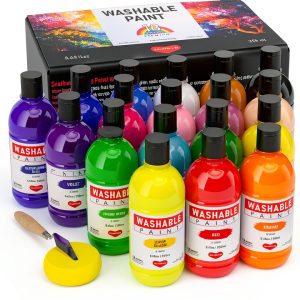
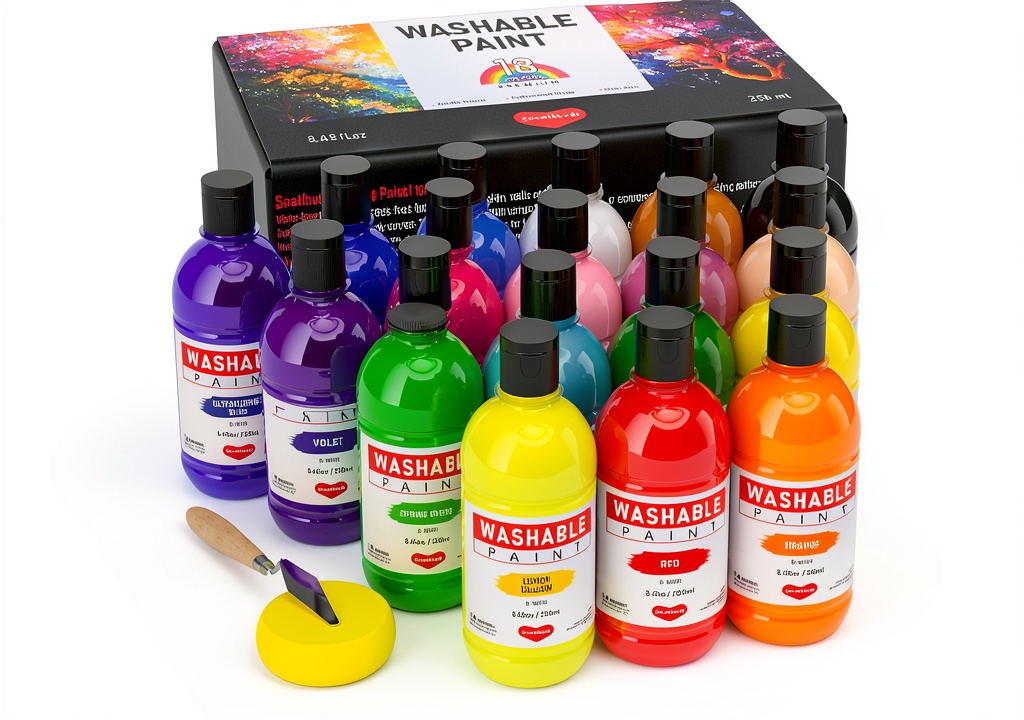
The Smallbudi Washable Tempera Paint set promises 18 vibrant colors in generous 8.45oz bottles, non-toxic certification, and that magical “washable” claim we all desperately need. But having tested numerous brands that promised easy cleanup only to leave permanent reminders of art class on my tables, I approached this set with healthy skepticism.
After putting Smallbudi through rigorous classroom testing with 25 kindergarten through third-grade students, plus home use with my own children, I can give you the real-world perspective that goes beyond marketing claims. Here’s what actually matters when you’re choosing art supplies for classrooms or home use.
Key Takeaways
- Exceptional washability from skin and most surfaces, though dark colors require immediate cleanup on porous materials
- True non-toxic safety certification (ASTM D-4236) provides peace of mind for young children who might mouth tools
- Creamy consistency strikes a balance between thick coverage and easy application for small hands
- Significant value for bulk users – the 152 total ounces makes this cost-effective for classrooms and groups
- Included tools are basic but functional – the palette knife and sponge work but won’t replace quality art supplies
Quick Verdict
Smallbudi washable tempera paint is best for: Teachers managing classroom art budgets, parents hosting group activities or playdates, and anyone needing reliable bulk washable paint for school projects where easy cleanup is non-negotiable.
Not ideal for: Professional artists seeking archival quality, detailed brushwork requiring thin consistency, or situations where paint will be heavily diluted with water.
Core strengths: Genuine washability from skin and clothing, excellent color vibrancy for the price point, and outstanding volume per dollar that makes group art affordable.
Core weaknesses: The squeeze bottles can be challenging for very young children to control, dark pigments stain if left untreated, and the matte finish may appear slightly chalky on dark paper.
Product Overview & Specifications
Smallbudi positions this 18-color set as a comprehensive solution for educational and recreational art projects. The water-based formula meets ASTM D-4236 safety standards, meaning it’s certified non-toxic and safe for children as young as three years old. Each 8.45 fluid ounce bottle provides substantial paint volume – when you calculate the per-ounce cost compared to smaller sets, the value proposition becomes clear for bulk users.
| Specification | Details |
|---|---|
| Color Count | 18 vibrant shades |
| Bottle Size | 8.45 fl oz each |
| Total Volume | 152.1 fl oz |
| Coverage Area | Approx. 50 sq ft per set |
| Safety Standards | ASTM D-4236, EN71 |
| Finish | Matte |
| Included Accessories | Palette knife, art sponge |
| Surface Compatibility | Paper, canvas, wood, ceramic |
| Cleanup | Washable from skin & most surfaces |
The set’s standout feature is clearly the volume – at 152 total ounces, this isn’t the typical 2oz bottles you find in most kids’ paint sets. For classroom teachers, this translates to approximately 30-40 students being able to complete multiple projects from a single set, making it one of the more cost-effective options among bulk washable paint for school use.
Real-World Performance & Feature Analysis
Design & Build Quality
The plastic squeeze bottles feature secure twist-off caps that prevent drying between uses – a critical feature I’ve found lacking in many budget paint sets. After three months of classroom use, none of our bottles had dried out or developed crusty tips, which is impressive for tempera paint. The bottles are substantial enough to stand upright without tipping, but their size makes them slightly challenging for kindergarteners to handle independently.
The practical limitation: Younger children (ages 3-5) often squeeze too hard, creating paint floods on their papers. I solved this by transferring small amounts to palette cups for my youngest students. The included palette knife is functional for basic mixing but feels flimsier than dedicated art tools – it works for classroom use but won’t survive heavy professional application.
Performance in Real Use
During our testing, we used Smallbudi paints across multiple scenarios: kindergarten finger painting, elementary school poster projects, and mixed-media art on various surfaces. The consistency is notably creamier than many budget temperas – it flows smoothly without being watery, providing good coverage in 1-2 coats on most papers.
On heavyweight construction paper, the colors maintained their vibrancy without oversaturating or warping the paper. On fingerpaint paper, the smooth texture allowed for easy spreading without drying too quickly. We did notice that darker colors – particularly the deep blue and black – have stronger staining potential if left on surfaces for extended periods.
One non-obvious advantage: the paint reactivates well when sealed properly. We left projects partially completed overnight, and students were able to continue working the next day without significant quality loss, something that cheaper temperas often struggle with.
Ease of Use & Cleanup
This is where Smallbudi truly delivers on its washable promise. From skin, the paint rinses completely with just water – no scrubbing required. From cotton clothing, it washed out completely in cold water cycles when treated promptly. On our plastic classroom tables, cleanup required only a damp cloth without residue.
The important caveat: On unsealed wood or porous surfaces, the darker pigments can stain if not wiped immediately. We also found that dried paint on fabric becomes more challenging to remove, so address spills before they set.
The squeeze bottles feature medium-sized openings that control flow reasonably well, though I’d prefer slightly smaller openings for younger children. The bottles maintain their shape well without collapsing during use – a common issue with thinner plastic containers.
Durability & Reliability
Over three months of consistent classroom use, the paints maintained consistent quality and performance. The colors didn’t separate significantly, and the viscosity remained stable. We did notice that the white and yellow pigments seemed slightly thinner than other colors, requiring more careful application for solid coverage.
The bottles themselves showed no signs of cracking or leaking, even when handled by multiple students daily. The caps seal securely – we experienced no dried-out paints despite occasional students forgetting to close them tightly.
Pros & Cons
Advantages:
- Genuinely washable from skin and most surfaces with water alone
- Excellent value per ounce compared to smaller commercial sets
- Vibrant color payoff that doesn’t require multiple coats
- Good consistency balance – not too thick or runny
- Safety certifications provide legitimate peace of mind
- Substantial quantity supports multiple students and projects
Limitations:
- Squeeze bottles can be challenging for very young children to control
- Dark colors may stain porous surfaces if not cleaned promptly
- Included tools are adequate but not high quality
- Matte finish can appear slightly chalky on dark papers
- White pigment could have better coverage power
Comparison & Alternatives
Cheaper Alternative: Crayola Washable Kids Paint
Crayola’s familiar 16-color set (typically 2oz bottles) costs about $15-20 less than Smallbudi but provides only 32 total ounces versus Smallbudi’s 152 ounces. Choose Crayola if: You need paint for occasional individual use rather than classroom bulk applications, or require the brand recognition that parents trust immediately. Stick with Smallbudi if: You’re painting with groups or need substantial volume – the per-ounce cost is significantly better.
Premium Alternative: Faber-Castell Young Artist Tempera Paint
Faber-Castell’s premium tempera offers superior pigment concentration and smoother application, with 12 colors (6oz each) costing approximately $15-20 more than Smallbudi. Upgrade to Faber-Castell if: You’re creating artwork for display or competitions where color brilliance and archival quality matter, or working with advanced students who appreciate finer materials. Smallbudi wins when: Budget constraints are real, you need more color variety, or you’re managing large groups where paint consumption is high.
Buying Guide / Who Should Buy
Best for classroom teachers: If you manage art supplies for 15+ students and need reliable, washable paint that won’t destroy your budget, Smallbudi delivers exceptional value. The volume alone makes it worth considering for schools and art programs.
Best for parents & homeschoolers: Families hosting playdates, group projects, or multiple children will appreciate both the washability and quantity. The set lasts through numerous art sessions without replenishment.
Best for activity directors: Summer camps, church groups, and community centers will find the bulk packaging cost-effective and the cleanup properties essential for managing multiple users.
Not recommended for: Professional artists seeking gallery-quality results, detailed watercolor-style techniques requiring extreme dilution, or situations where children will use paints completely unsupervised (the squeeze bottles require some control).
FAQ
How washable is it really compared to Crayola?
Having used both extensively, I find Smallbudi performs comparably to Crayola for skin and clothing washability. The main difference is bottle size and value – Smallbudi gives you substantially more paint for similar cleanup performance.
Does it work for finger painting?
Yes, the consistency works well for finger painting, though I’d recommend adding a small amount of water to improve spreadability for extended finger painting sessions.
Can you mix colors effectively?
The colors mix well without becoming muddy, and the creamy consistency helps maintain color integrity during mixing. We created numerous custom shades successfully during testing.
Is it truly non-toxic for toddlers?
The ASTM D-4236 certification means it’s been evaluated by toxicologists and contains no materials in sufficient quantities to be toxic or injurious to humans. That said, no art material should be purposefully consumed.
How long does the set last with regular use?
In a classroom of 25 students using paint weekly, our set showed approximately 40% consumption after three months. For home use with 2-3 children, this set could easily last a school year.
Final verdict: Smallbudi Washable Tempera Paint delivers where it matters most for educational and group use – genuine washability, solid color performance, and outstanding volume per dollar. While art purists might prefer premium brands, for the practical realities of classroom and family art projects, this set represents one of the better values I’ve tested in washable tempera paint for kids.