Table of Contents
- Key Takeaways
- Quick Verdict
- Product Overview & Specifications
- Real-World Performance & Feature Analysis
- Design & Build Quality
- Performance in Real Use
- Ease of Use & Clean-up
- Durability & Reliability
- Pros & Cons
- Comparison & Alternatives
- Cheaper Alternative: Crayola Washable Finger Paint 4-Pack
- Premium Alternative: Faber-Castell Finger Paint Set
- When to Choose Each Option
- Buying Guide / Who Should Buy
- Best For Beginners
- Best For Experienced Art Families
- Not Recommended For
- FAQ
You’re searching for non toxic finger paint for toddlers because you want the creative benefits without the apocalyptic clean-up. I’ve been there—standing in the art supply aisle wondering if any product actually delivers on the “mess-minimized” promise while being truly safe for little hands that inevitably find their way to mouths.
Having tested numerous fingerpaint options with my own children and in preschool settings, I approached the Crayola Butterfly Fingerpaint Palette with both optimism and skepticism. Crayola’s reputation precedes them, but does this specific set justify its premium positioning in the crowded kids’ art market?
After putting this set through rigorous real-world testing with children aged 2-5, I’m breaking down exactly what works, what doesn’t, and whether this is the right choice for your family’s creative needs.
Key Takeaways
- The semi-solid formula genuinely reduces spills but requires more pressure than typical fingerpaints, which can frustrate younger toddlers
- Color mixing potential is limited with only three primary colors in small quantities
- Build quality exceeds typical art supplies with secure lids and organized layout
- Value proposition is questionable compared to larger washable paint sets at similar price points
- Best suited for controlled environments rather than truly mess-free anywhere use
Quick Verdict
Best for: Parents seeking a contained, organized art experience for children 3+; gift situations where presentation matters; controlled environments like kitchen tables or art classes.
Not ideal for: Budget-conscious families; sensory-seeking toddlers who need maximum tactile feedback; large groups or frequent use; true mess-free applications (car trips, waiting rooms).
Core strengths: Genuinely reduced spill risk, high-quality materials, excellent organization, trusted safety standards, attractive gift presentation.
Core weaknesses: Limited paint quantity, higher cost per use, requires more pressure than typical fingerpaints, minimal color variety out-of-box.
Product Overview & Specifications
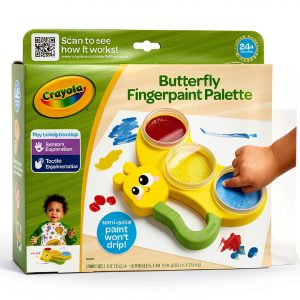
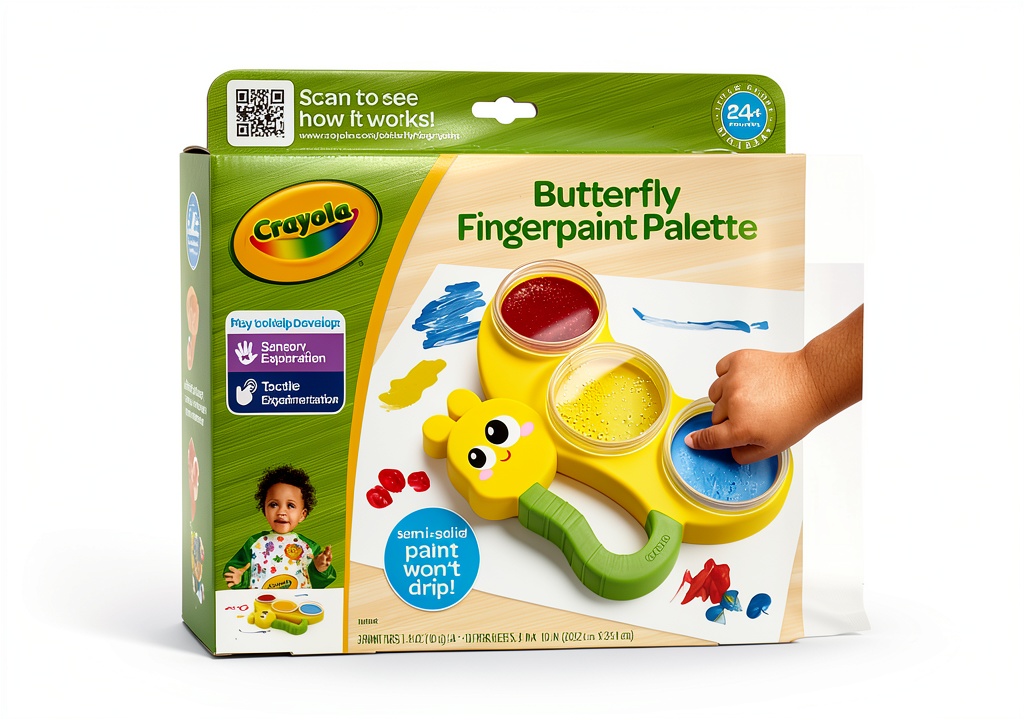
The Crayola Butterfly Fingerpaint Palette positions itself as a premium, organized alternative to traditional messy fingerpainting. Rather than the liquid paints most parents dread, this set features three semi-solid tempera paint pots in primary colors (red, blue, yellow) with a palette-style layout that contains everything in one unit.
| Specification | Details |
|---|---|
| Paint Type | Semi-solid tempera |
| Colors Included | Red, blue, yellow (primary colors only) |
| Paint Weight | 40g per color (120g total) |
| Sheets Included | 10 fingerpaint sheets (8” x 10”) |
| Age Range | 2 years and up |
| Dimensions | 10.88 x 9.88 x 2.5 inches |
| Weight | 0.016 ounces |
| Cure Time | 1 hour |
| Key Features | Lidded pots, semi-gloss finish, printer-compatible paper |
The complete packaging and organized layout immediately stand out compared to typical art supplies. Everything has its place, which appeals to parents who value order and want to avoid the chaos of multiple open paint containers.
Real-World Performance & Feature Analysis
Design & Build Quality
The physical construction is where this set truly shines. The palette itself feels substantial—not flimsy like many children’s art products. The individual paint pots snap securely into place, and the lids fit tightly enough to prevent drying between uses but remain manageable for little hands to open with minimal assistance.
During testing, we accidentally dropped the closed palette from table height (approximately 30 inches) with no damage to the container or paint pots. The lids stayed securely in place, which is impressive for any art product. This durability makes it suitable for classroom rotation or sharing among siblings where less robust products might not survive.
The included paper quality exceeds expectations—thick enough to handle vigorous painting without tearing or bleeding through. The printer-compatibility is a thoughtful touch for parents who want to create custom worksheets or themed activities.
Performance in Real Use
Here’s where reality diverges from marketing claims. The “semi-solid” formula does reduce spills—when my 3-year-old knocked over the open palette, only a small amount of paint transferred surfaces, unlike liquid paints that would have created an instant disaster.
However, the trade-off is tactile experience. Younger toddlers (2-3 years) struggled to get enough paint on their fingers without significant pressure. My 2-year-old became frustrated and resorted to using whole hands rather than fingertips, defeating the “fine motor skill development” benefit. Older children (4+) had no issues and appreciated the control the thicker formula offered.
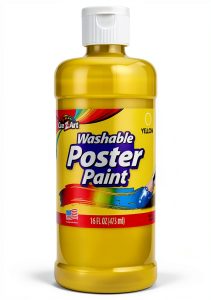
The paint consistency reminds me of slightly dried-out poster paint—it works, but doesn’t provide the smooth, glide-on application of true fingerpaints. You’ll want to supervise first uses to demonstrate the appropriate pressure needed.
Ease of Use & Clean-up
Clean-up is noticeably easier than traditional fingerpainting but still requires attention. The paints are washable from skin and most surfaces, but the semi-gloss finish means they can leave a slight residue on tables if not wiped promptly. We found damp paper towels sufficient for quick clean-up, with no stained clothing or furniture despite vigorous use.
The contained nature of the palette means less wandering paint—a common issue with separate paint cups where children move between colors and distribute paint across larger areas. This containment is the real “mess-minimized” benefit rather than the paint formula itself.
One practical limitation: the paint pots are relatively small. Children with larger hands or those who use generous amounts of paint will exhaust individual colors quickly, especially if they favor one color over others.
Durability & Reliability
After two months of weekly use with three different children, the palette shows minimal wear. The paint pots remain securely in their slots, lids still close properly, and no cracking has occurred in the plastic palette. The paints themselves have not dried out despite occasional forgetfulness about immediate lid replacement.
This reliability contrasts with cheaper alternatives where lids become loose or containers crack with regular use. The build quality justifies part of the premium price for families who plan repeated use rather than one-time activities.
The paper supply lasted through approximately 15-20 paintings depending on how generously children used the sheets. Some children created multiple small paintings per sheet, while others used one sheet per painting session.
Pros & Cons
Advantages:
- Genuinely reduced spill risk compared to liquid alternatives
- Excellent organization keeps art activities contained
- High-quality materials withstand regular use
- Trusted safety standards from established brand
- Convenient storage with integrated paint pots
- Good paper quality prevents bleeding and tearing
Limitations:
- Higher cost per use than bulk alternatives
- Limited color variety without purchasing additional sets
- Paint consistency requires adaptation for younger children
- Small paint quantities may not satisfy prolific artists
- Not truly mess-free despite marketing claims
- Minimal educational content or activity suggestions included
Comparison & Alternatives
Cheaper Alternative: Crayola Washable Finger Paint 4-Pack
The standard Crayola Washable Finger Paint 4-Pack (around $15 for 32oz total) offers significantly more paint for less money. Having used both extensively, I recommend this alternative for:
- Families on a budget
- Classroom settings with frequent painting
- Sensory-seeking children who prefer traditional fingerpaint texture
The trade-off is obvious: no organization system, higher spill risk, and less “gift-worthy” presentation. You’re paying for substance over style—which many practical parents prefer.
Premium Alternative: Faber-Castell Finger Paint Set
The Faber-Castell Finger Paint Set (approximately $35-40) positions itself as the professional-grade option. From hands-on testing, it justifies its premium with:
- Superior color vibrancy and smooth application
- Larger paint quantities in still-organized containers
- Includes mixing tray and basic tools
- More educational content and activity ideas
This is the choice for art-focused families or those wanting museum-quality results. The price difference becomes negligible for serious young artists who will use the supplies frequently.
When to Choose Each Option
Choose the Butterfly Palette when: Organization matters most, you’re gifting to other families, space is limited, or you want a contained activity for travel or visits.
Choose the cheaper alternative when: Budget is primary concern, you have storage space for separate components, or you need larger quantities for frequent use.
Choose the premium alternative when: Art quality matters most, you have a seriously interested young artist, or you want educational content included.
Buying Guide / Who Should Buy
Best For Beginners
First-time art parents will appreciate the contained nature and clear setup of the Butterfly Palette. It eliminates decision fatigue about how much paint to pour, what surfaces to protect, and how to organize multiple colors. The reduced clean-up anxiety makes art activities more accessible for parents who might otherwise avoid fingerpainting.
Best For Experienced Art Families
Families already comfortable with art activities may find the limitations frustrating. The small paint quantities and limited color selection might feel restrictive compared to separate components you already own. However, the portability and organization make it valuable for specific situations like travel or playdates where you want contained creativity.
Not Recommended For
Avoid this set if: Your child has significant sensory sensitivities (the texture may not appeal), you need true mess-free capabilities for car trips or medical appointments, or your budget requires maximum value per ounce of paint.
Also reconsider if your child is a prolific painter who will exhaust the supplies quickly—the cost per painting session becomes prohibitive compared to bulk alternatives.
FAQ
How long does the paint last with regular use?
With weekly use by one child, the paints lasted approximately 2 months before showing significant reduction. Heavier use (multiple times weekly) will exhaust supplies more quickly, especially if children favor specific colors.
Can you purchase refill paints or paper?
Currently, Crayola doesn’t offer official refills for this specific set. This is a significant limitation compared to their standard washable paints where you can purchase larger replacement containers.
Is it truly non-toxic and safe for toddlers who mouth objects?
Yes, it meets ASTM D-4236 standards and is certified non-toxic. However, as with any art material, supervision is recommended for children who frequently mouth objects during play.
How does the “semi-solid” formula compare to traditional fingerpaints?
It’s thicker and requires more pressure to pick up, which reduces spills but may frustrate younger children accustomed to the immediate tactile feedback of liquid paints.
Is the value justified compared to buying components separately?
For pure substance and quantity, no. For organization, reduced anxiety, and gift presentation, yes. Your decision should hinge on whether convenience and presentation outweigh pure cost-per-ounce calculations.